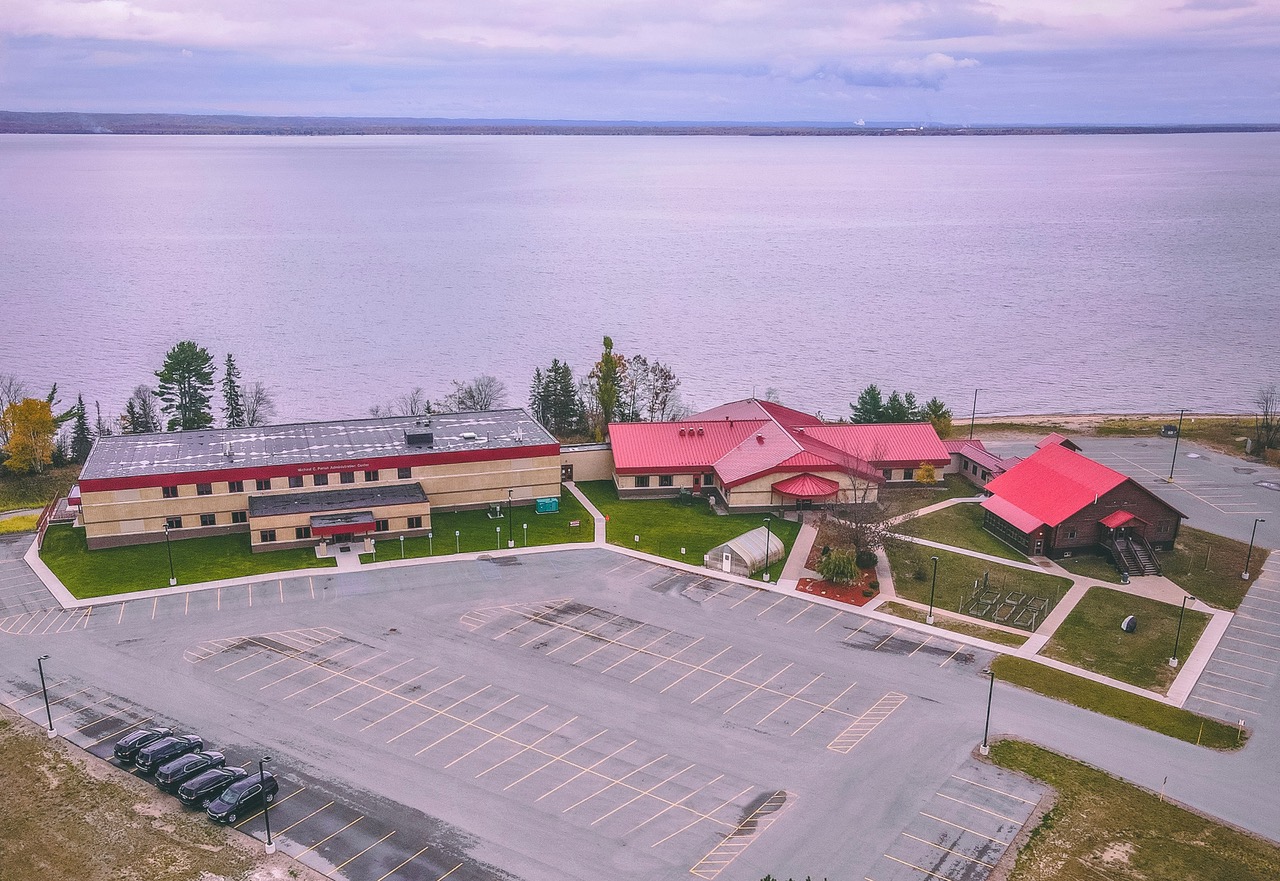
The 2026 report, which includes data from Bay Mills Community College, identifies OER as a “high impact practice” that can improve student success, especially at minority serving institutions.
By Bowman Leigh
On top of paying tuition, the cost of textbooks and supplies can add up for college students.
According to the Education Data Initiative, the average student spends $340 per year on course materials, with 63% of students reporting that they cannot afford textbooks. Without these supplies, students’ educational experience can suffer — leading to failing grades, or requiring students to work extra hours to cover the cost.
To ease the financial burden, more colleges and universities are utilizing open educational resources, also known as OER: free, digitally-available materials including textbooks, lectures and online classes, and multimedia learning tools.
Prior research on the impact of OER has been limited and inconclusive, but a new report offers broader insight into how OER is affecting the student learning experience. The two-year study, compiled by the American Association of Colleges and Universities, looks at data from nearly 700,000 students across 15 institutions, including public and private universities, community colleges, tribal colleges, and historically Black colleges and universities, as well as feedback from more than 200 instructors.
The study found that implementing OER can improve student success and increase accessibility to course materials. In doing so, the report argues OER should be considered a “high impact practice,” an AACU designation for a teaching or learning approach that provides meaningful educational benefits to students, particularly those from historically underserved populations.
Bay Mills Community College, the first fully accredited, tribally controlled college in Michigan, participated in the AACU study. Development Director Kathy Adair, who also chairs the social science department, helped compile the BMCC data shared in the report. Adair teaches several social science classes and says her department — the third largest on campus — relies heavily on OER.
“We’re the department that uses the OERs more than anybody,” Adair said on the phone. OER is also used in business, psychology, and history courses at BMCC.
When it comes to the benefits of OER for students, Adair points to the value of keeping course materials accessible and affordable.
“Our students constantly report that having the textbooks on day one is very beneficial to them. Not only that it’s free, but they don’t have to stress about getting behind because they don’t have their textbooks in time,” Adair said.
Incorporating OER into her classes has enabled Adair to explore new multimedia avenues for instruction. For the past year and a half, she has converted her lectures – which are also available as Powerpoint slides — into podcasts.
“[Using podcasts] just helps drive the message home, I think, a little bit more,” Adair said.
With OER, students in Adair’s classes can also read ahead and use search tools to easily find parts of online textbooks they want to review. Having quick access to course materials, Adair says, helps students succeed.
According to the AACU report, the number of “A” grades increased across all educational contexts when OER was used.
While use of OER is not widespread at BMCC, Adair wishes that it was. At the same time, she acknowledges that not all instructors are interested in adjusting their curriculums to include it. Over-reliance on OER tools can also impact the school’s bookstore.
At the same time, Adair says BMCC is actively looking for places where OER can have an immediate benefit, such as replacing an expensive medical billing and coding textbook used in the school’s new nursing program.
“We’re definitely open to [OER], and it’s just finding the right resource that’s out there,” Adair said.
Bowman Leigh is a writer based in Missoula and a graduate of the University of Montana’s School of Journalism. Her work has appeared in Mountain Journal, The Pulp and on Montana Public Radio, and she is a former fire reporting intern for Montana Free Press.