NTU’s online electrical engineering PhD program will train students using virtual reality tools and feature experts from around the country
By Bowman Leigh
In fall 2023, Navajo Technical University debuted a new doctoral degree in Diné Culture and Language Sustainability, becoming the first tribal college or university to offer a Ph.D. program. Now, three years later, NTU is poised to offer another doctorate—this time in electrical engineering—that will provide advanced training opportunities and open a range of career paths for students.
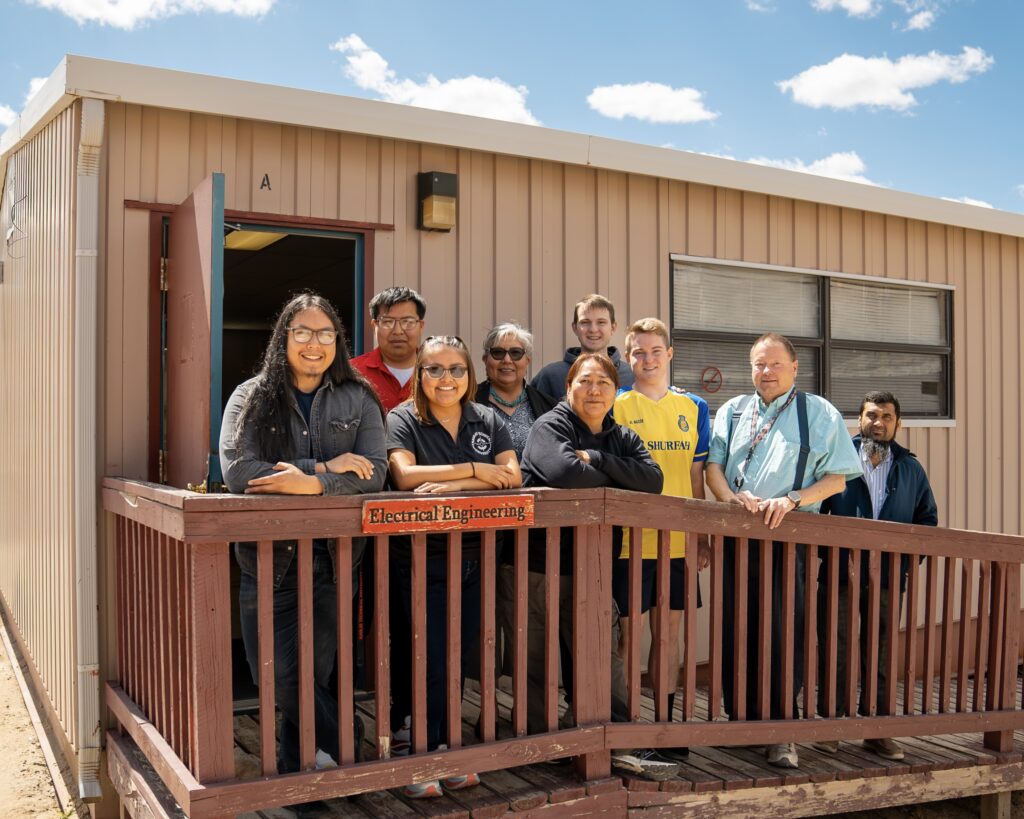
The new program is supported by a five-year, $2.5 million award through the National Science Foundation’s Tribal Colleges and Universities Program. Once open for enrollment, NTU’s electrical engineering Ph.D. will be the first degree of its kind at any tribal college or university. Dr. Peter Romine, associate professor of electrical engineering at NTU, will oversee the program’s design and expects it will open within two years. The award will pay for Romine’s salary and enable him to hire two full-time faculty.
Romine developed NTU’s electrical engineering master’s program in 2024, and graduated his first student last December. With additional funding to develop a post-graduate degree, he is excited to grow the program’s potential. Having dedicated faculty, Romine says, is a big win.
“One of the things that was extremely frustrating was we couldn’t retain faculty, especially in electrical engineering,” Romine said.
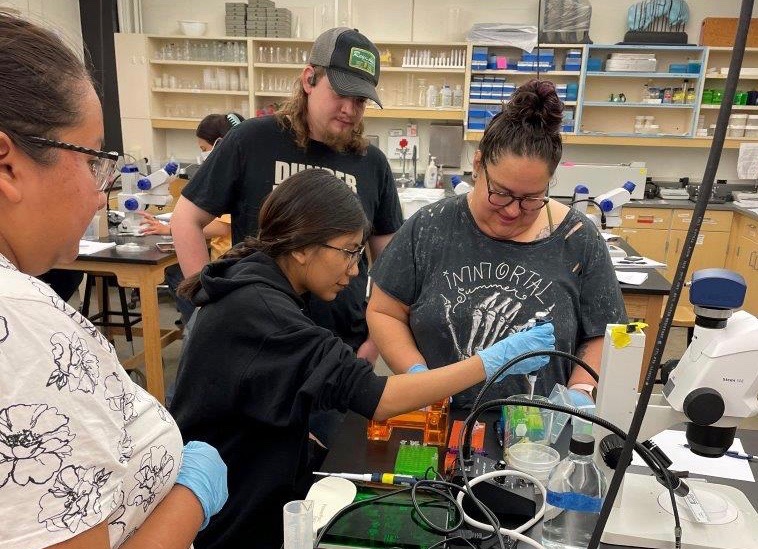
The program’s online model will enable more students to access doctoral-level courses, including students at NTU as well as from other tribal colleges and universities. To successfully teach electrical engineering online, Romine plans to utilize virtual reality technology and also hopes to bring in outside experts. As part of the grant award, Romine says he has funding available to hire adjunct faculty from larger schools, who can also help shape the curriculum.
Romine, 66, first came to NTU in 2014. Originally from Alabama, he sees himself returning home in the coming years to be closer to family while continuing to oversee the university’s electrical engineering department. Ultimately, though, Romine hopes the advanced degree program will train more Native students who can eventually take over the program.
“If we could have master’s and Ph.D. faculty [who] were Native American and go back and teach on their land, then that to me is a really cool accomplishment,” Romine said.
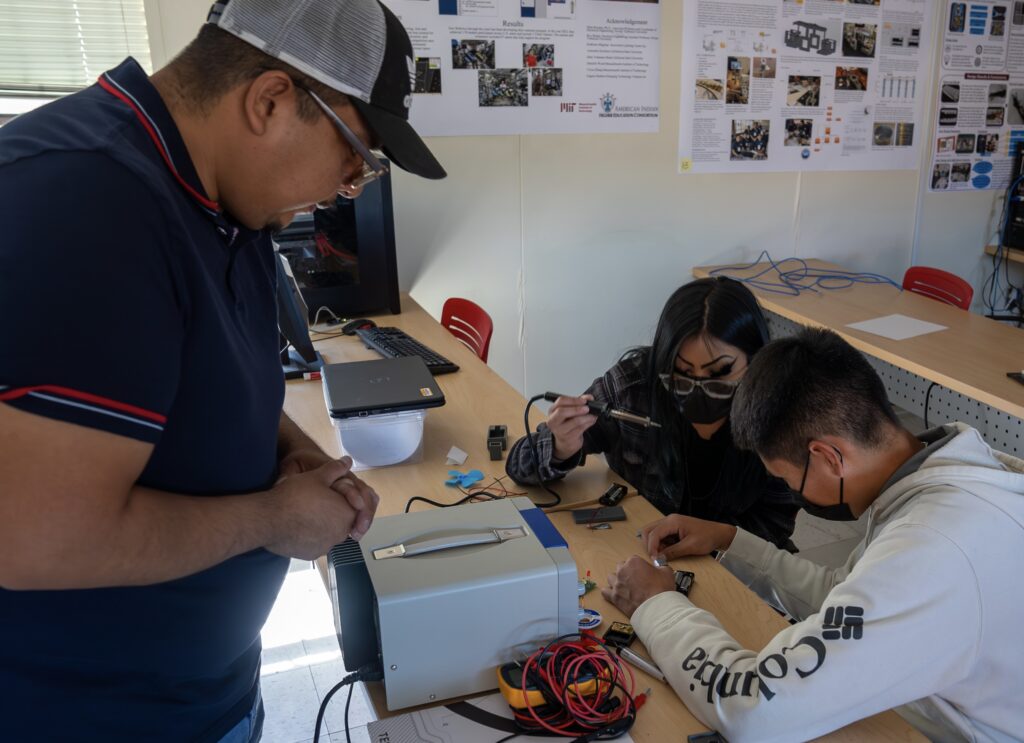
Similar to Romine’s goal for the master’s program, the Ph.D. track is designed to prepare students to pursue a variety of engineering jobs, many related to clean energy. In addition to offering advanced coursework, NTU partners with Sandia National Laboratories and Los Alamos National Laboratory to provide students with internships and on-the-ground experience in microelectronics, manufacturing and cybersecurity.
For those students who are able to study on campus, Romine says NTU is also in the process of constructing a new building that will include a large electrical engineering lab with a dedicated microelectronics manufacturing and testing space. Combined with virtual reality and artificial intelligence tools, Romine is hopeful that the doctorate program will successfully blend in-person opportunities with modern technology.
While full time Ph.D. programs in engineering generally require five to six years—and can take even longer when students find themselves supporting faculty research—Romine’s philosophy is that a program’s effectiveness is best measured by the number of students who move through it and find purpose within the community. For students who have already completed a master’s in electrical engineering at NTU, Romine estimates that they could earn the Ph.D. in two years.
“For me, success is based on how many students I graduated, how many go on and get good jobs and have good careers,” Romine said.
Bowman Leigh is a writer based in Missoula and a graduate of the University of Montana’s School of Journalism. Her work has appeared in Mountain Journal, The Pulp and on Montana Public Radio, and she is a former fire reporting intern for Montana Free Press.